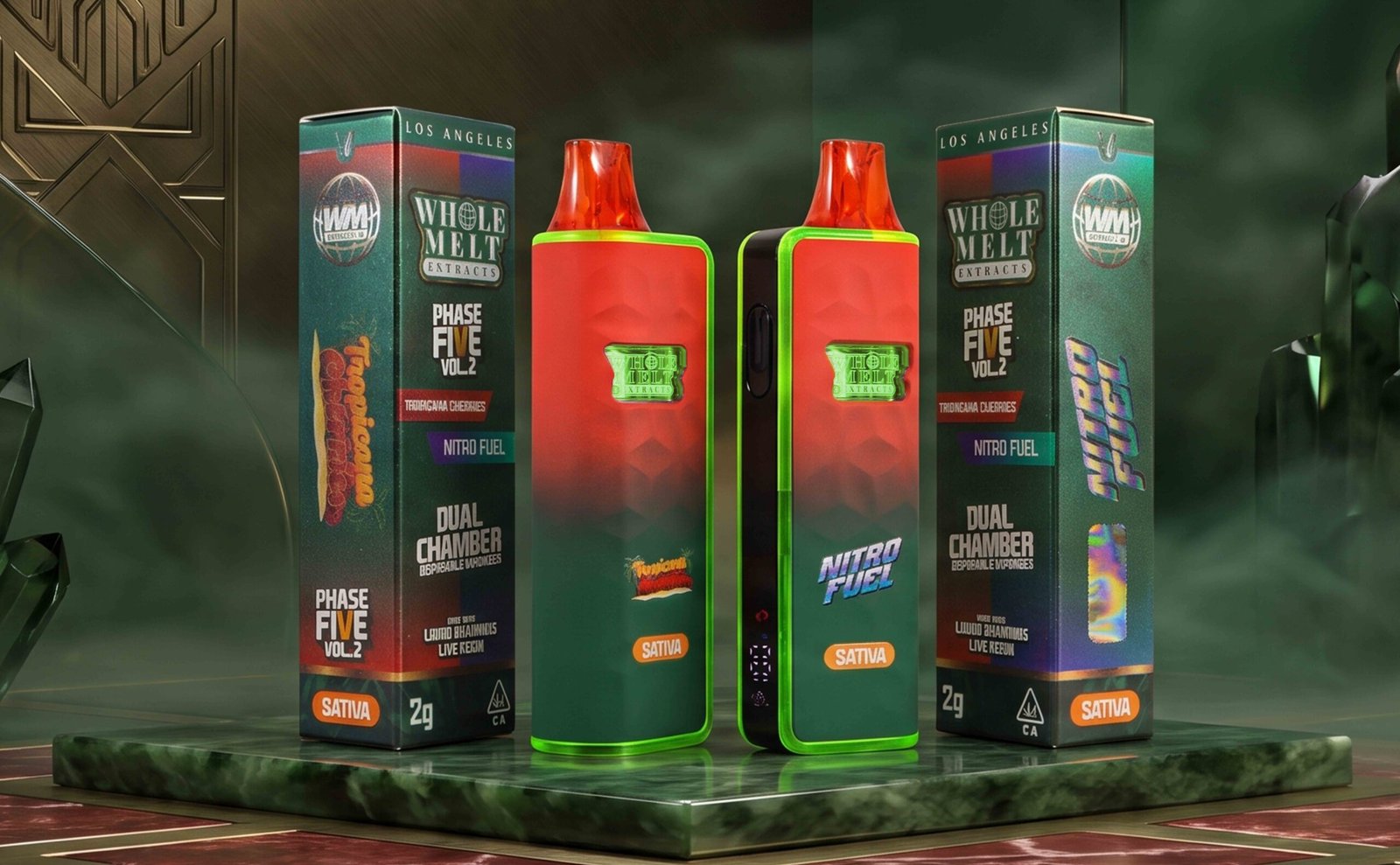
Choosing disposable hardware for a wholesale catalog involves more than comparing product photographs or advertised prices. Buyers need to understand the exact configuration, verify technical documentation, evaluate supplier reliability, and determine whether the product meets the requirements of the intended market.
The Whole Melt Extracts 2g Disposable Phase 5 V2 (Empty) is a useful example of why a structured evaluation process matters. Product names can help identify a model, but purchasing decisions should be based on verified specifications and the exact components included in the shipment.
This guide provides a practical framework for comparing empty disposable hardware, reviewing supplier information, and identifying questions that should be resolved before placing a wholesale order.
1. Start With the Exact Product Configuration
Before comparing suppliers, establish which product version you need.
A model name may appear across several listings, yet the actual products may differ in dimensions, construction, battery configuration, packaging, or included components. Version names such as “V2” should be verified against a supplier’s current documentation rather than treated as a complete specification.
For the Whole Melt Phase 5 V2, request the following information:
The full model name and version identification.
Overall dimensions and unit weight.
A list of components included with each unit.
Available product drawings or technical photographs.
Packaging configuration and carton information.
A dated specification sheet identifying the applicable model.
These details establish a consistent baseline for supplier comparisons.
If a supplier cannot clearly identify the product version, ask for written clarification before proceeding. This is particularly important when a wholesale catalog includes multiple visually similar devices.
2. Compare Technical Specifications Consistently
A useful comparison evaluates the same technical fields for every supplier.
Dimensions and weight
Dimensions affect packaging requirements, storage planning, and shipping calculations. Request measurements in both metric and imperial units if your purchasing team uses different systems.
Unit weight and packaged weight should be recorded separately when available. This helps prevent confusion when estimating shipping requirements.
Battery and charging information
For a model containing an integrated battery, verify the rated battery capacity, charging interface, relevant electrical specifications, and supporting safety documentation.
Do not assume that two devices share the same battery configuration simply because their housings look similar. Confirm the details for the precise version being quoted.
Materials and component documentation
Ask suppliers to identify the materials used in the housing, reservoir, seals, and other relevant components. Where material compatibility is important, request documentation applicable to the intended contents and conditions of use.
A generic materials statement may not answer every compatibility question. The documentation should identify the component or material it covers.
Packaging and included items
Clarify whether the quoted product includes individual packaging, accessories, labels, protective materials, or master cartons.
Ask for actual packaging photographs and a written packing list. If customization is available, distinguish standard packaging from customized options in the quotation.
3. Evaluate Product Quality and Consistency
Quality assessment should focus on documented processes and measurable acceptance criteria.
Ask whether the supplier has written incoming-material checks, production inspections, finished-unit inspections, and procedures for recording defects. Request an explanation of how product versions and production batches are identified.
A sample can help establish whether the physical product matches the description. However, one sample cannot prove that every unit in a future shipment will be identical.
Before ordering, agree on what happens if delivered goods do not match the approved sample or written specifications. The agreement should describe the reporting process, required evidence, inspection window, and available remedies.
These procedures are more useful than broad claims that a product has “premium quality” without supporting information.
4. Assess the Supplier, Not Just the Device
A technically suitable product may still be a poor purchasing choice if the supplier cannot communicate clearly or maintain consistent documentation.
Evaluate suppliers across several practical areas:
Evaluation area
Questions to ask
Product knowledge
Can the supplier explain the exact model and version?
Documentation
Are specifications current and model-specific?
Communication
Are questions answered clearly and consistently?
Order terms
Are minimum quantities, lead times, and payment terms documented?
Quality control
Are inspection processes and defect procedures explained?
Packaging
Can the supplier confirm the actual packing configuration?
Compliance
Can relevant market-specific documentation be provided?
Comparing suppliers using the same questions makes differences easier to identify. It also reduces the likelihood of choosing an offer based only on a low initial quotation.
5. Understand Price Beyond the Unit Quotation
Unit price is only one component of total purchasing cost.
A more complete comparison considers packaging, shipping, inspection, payment charges, expected defect-handling costs, and any additional documentation or customization expenses.
For example, a lower quoted unit price may not represent better value if packaging is excluded or if the specification is unclear. Conversely, a higher quotation does not automatically indicate better quality.
Request itemized quotations that identify the product version, quantity, packaging, delivery terms, payment terms, and any additional charges. Compare offers on the same basis.
For international transactions, clarify which party is responsible for shipping arrangements, import documentation, duties, and other applicable charges.
6. Review Compatibility and Intended-Market Requirements
Compatibility should never be assumed from appearance alone.
If a buyer needs to evaluate a device for a particular technical application, the supplier should provide documentation addressing relevant materials, components, and operating limitations. Any claimed compatibility should be supported by appropriate evidence.
Buyers must also review the legal and regulatory requirements applicable to the product and intended market. Empty hardware can still be subject to requirements involving batteries, electrical safety, materials, packaging, labeling, or product distribution.
If the device is intended for use with regulated consumables, additional rules may apply to the finished product and the activities of the parties handling it. Empty-hardware documentation should not be treated as proof that a finished product is compliant.
7. Create a Simple Supplier Comparison Sheet
Before requesting final quotations, create a comparison sheet with consistent fields.
Include model identification, dimensions, weight, battery information where applicable, material documentation, included components, packaging, minimum order quantity, lead time, inspection procedures, and order terms.
Mark unverified fields as “pending confirmation” rather than filling gaps with estimates. This distinction is important when several quotations contain incomplete or inconsistent information.
The comparison sheet can also record communication quality and unresolved questions. These details help purchasing teams understand not only what is being offered, but also how confidently they can plan around the offer.
8. Questions to Resolve Before Ordering
Before approving a purchase, make sure you can answer the following:
Is the quoted product the exact Phase 5 V2 version requested?
Does the quotation clearly identify the empty-hardware configuration?
Are the advertised specifications supported by current documentation?
Are the included components and packaging explicitly listed?
Are quality inspection and defect-handling procedures documented?
Are shipping terms, delivery estimates, and payment conditions clear?
Have relevant legal and market requirements been reviewed?
If important questions remain unanswered, request clarification before committing to an order.
Conclusion
Evaluating Whole Melt Extracts 2g Disposable Phase 5 V2 empty hardware requires a consistent approach to technical specifications, supplier communication, quality documentation, and total purchasing cost.
The most useful comparison is not necessarily the one with the most impressive product description. It is the one that provides clear, verifiable information and documents the exact product being offered.
By using a standardized checklist, buyers can compare suppliers more fairly, identify missing information early, and make purchasing decisions based on evidence rather than assumptions.